P2P Crypto in Thailand: The Rules Changed
P2P used to be Thailand's default on-ramp. Today it's the single likeliest way to get your bank account frozen. Here's the honest 2026 picture — who still needs it, who should walk away.
- Post Bybit/OKX-block reality
- Latest mule-account data
- Full self-protection checklist
Last verified: 20 October 2026
What happened to Thai P2P
Three events permanently reshaped the landscape. First, the April 2025 emergency-decree amendments extended Thai jurisdiction to foreign platforms serving Thai users and criminalised lending out bank or crypto accounts (mule accounts) with serious penalties. Second, the blocking of Bybit, OKX, CoinEx and XT.COM from 28 June 2025 switched off the two P2P marketplaces Thais actually used, overnight. Third, the war on mule accounts: Thai digital-asset operators froze over 47,000 suspect accounts in 2025 and roughly ten thousand more in early 2026, while banks now hold transfers of ฿50,000+ for up to 24 hours of enhanced checks.
The result: the familiar P2P flow — open app, pick a counterparty, send PromptPay, receive coins — has almost no legal platform left to live on, and the risk cost of accepting a stranger's money has risen past any price advantage.
The #1 risk isn't getting scammed — it's getting frozen
Classic trade scams (pay and receive nothing) are what escrow solves. The unsolvable risk is different: the baht your counterparty sends may be scam proceeds. When the upstream victim files a police report, every account along the money trail is frozen automatically — yours first, questions later. Unfreezing takes weeks to months, and plenty of expats in Pattaya and Phuket have been through it without ever knowing what the money touched before them.
Who still uses P2P — and the minimum safety bar
The genuine remaining P2P audience is people locked out of normal rails: no Thai bank account, incomplete KYC documents, or specialised cross-border needs. If that's you, the floor for self-protection is: escrow platforms with verifiable reputations only; counterparties with hundreds of completed orders; funds accepted solely from accounts matching the counterparty's verified name — never third parties or "company accounts"; coins released only when money is confirmed in your account, not from a slip screenshot; full records of every deal.
If you do hold a passport plus residence documents, our straight advice: today's P2P risk isn't worth any spread. Use a licensed exchange for baht, or a global passport-KYC platform for cards, and let P2P stay in the past.
Match the alternative to your actual problem
| Your situation | Safer route than P2P |
|---|---|
| Thai bank account, want lowest cost | SEC-licensed exchange — 0.25% + tax-exempt gains |
| No Thai bank / visiting | Global platform, passport KYC, card funding — how to buy |
| Want to spend crypto while travelling | TouristDigiPay — convert to a QR-spendable balance |
| Seven-figure baht amounts | Licensed OTC desk — one locked price for the block |
The crackdown in numbers: why P2P risk got real
If the warnings on this page sound overcooked, the official figures for October 2025 – June 2026 answer for themselves: roughly 351,884 mule accounts closed in nine months, reported online-crime losses down 87%, over ฿24 billion seized or frozen, and more than 29,000 suspects arrested. Cumulatively, more than 1.18 million bank accounts have been frozen since late 2023 — a machine that sweeps up both criminals and people who merely accepted a transfer from the wrong stranger. On the crypto side, licensed operators keep freezing suspect accounts under the new delayed-withdrawal "speed bump" rules.
The headline case touching Thailand directly: a joint Royal Thai Police–US HSI–Binance operation dismantled a pig-butchering network with more than 3,200 Thai victims and roughly $277 million seized. Behind the regional ecosystem sits the Prince Group case, where the US DOJ seized 127,271 BTC (~$15 billion) — the largest forfeiture in history. This is the same ecosystem that feeds those "great rate" P2P offers in your Telegram.
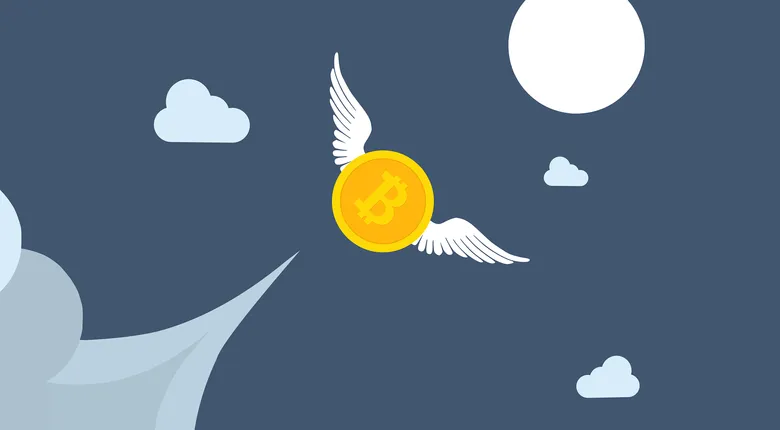
Money accepted from strangers can take your bank account flying with it — at least temporarily.
The conclusion is unchanged, just heavier: every baht that lands in your account from a stranger has a non-trivial chance of connecting to one of the money trails above. And if you draw the short straw, the recovery process (call 1441, press 2, with source-of-funds evidence — detailed in the selling guide) is hours to days you never needed to lose.
P2P FAQ
Is P2P crypto trading still legal in Thailand?
Person-to-person trades aren’t criminal in themselves, but the environment has hardened: major foreign P2P platforms (Bybit, OKX) are blocked, habitually buying and selling as a business without a licence is illegal digital-asset business, and bank accounts receiving P2P money face sharply higher freeze risk under the mule-account crackdown.
Can I use Binance P2P?
Binance TH — the licensed Thai entity — has no P2P product, only a regular THB order book. Global Binance is unlicensed in Thailand and was the subject of a 2021 criminal complaint; using it from Thailand sits in the same grey zone as the other offshore platforms.
Why did the P2P premium disappear?
P2P premiums existed when normal on-ramps were scarce. Today licensed Thai venues give true market price plus 0.25%, so nobody with a Thai bank account has a reason to pay a stranger 2–5% over. Remaining P2P demand concentrates among people excluded from regular rails — inherently the highest-risk counterparty pool.
If I must trade P2P, how do I reduce the risk?
Escrow-backed platforms only; counterparties with long, verifiable history; receive funds solely from an account matching the counterparty’s verified name; refuse third-party or company accounts; release coins only once money is actually in your account (slips prove nothing); and document everything. Even then, the tainted-money freeze risk never goes to zero — you cannot audit where a stranger’s baht came from.
Does paying via PromptPay or TrueMoney make P2P safer?
No. The payment rail was never the problem. The core risk is whether the counterparty’s money is clean — and no payment method lets you verify that.
Sources: SEC/MDES unlicensed-platform blocking orders (May–Jun 2025) · mule-account freeze figures — Bangkok Post reporting of operator data (Mar 2026) · April 2025 emergency-decree amendments — Royal Gazette.