Bringing Crypto to Thailand: The Tourist's Playbook
Thailand bans direct crypto payments — but built an official side door for visitors: TouristDigiPay turns your coins into a baht balance you can spend by QR almost anywhere. Here's how it works, the limits, and every backup option.
- Summarised from official announcements
- All limits and conditions included
- Backup options covered
Last verified: 20 October 2026
The big picture for visiting holders
Millions of crypto-holding travellers land in Thailand each year and hit the same question: how useful are my coins here? The answer changed materially in August 2025, when the SEC unveiled TouristDigiPay under its regulatory sandbox — the first official channel for converting crypto to spendable money, purpose-built to boost tourism, with Phuket as its flagship market.
The clever part is how it stays legal: you never pay a merchant in crypto. You sell coins for baht through a licensed operator first; the baht sits in a Bank-of-Thailand-regulated e-money "tourist wallet"; then you scan Thai QR like any local. The merchant receives baht and needn't know crypto was ever involved.
TouristDigiPay step by step
- Check eligibility — foreign tourist on a temporary stay with a valid passport and entry documents.
- Open an account with a participating operator — full KYC with a licensed digital-asset business enrolled in the scheme (check the SEC's current participant list before you travel).
- Deposit and convert — sell your crypto through that account; baht credits your tourist wallet. Conversions above ฿50,000/month add source-of-funds verification.
- Spend by QR nationwide — within the limits: ~฿500,000/month at card-terminal merchants, ~฿50,000/month at small vendors. Cash-out is not permitted.
Every tourist option, compared
| Method | Best for | Limitations |
|---|---|---|
| TouristDigiPay | Day-to-day trip spending | Monthly caps, no cash, participating operators only |
| Crypto Visa/Mastercard | Those already carrying one | Issuer FX fees; some small vendors are cash/QR-only |
| Sell on a global platform → ATM via card | When you need banknotes | Stacked fees (sale + ATM + FX) |
| Unlicensed street changers | — | Avoid: illegal desks, raided, scam exposure |
What won't work — know before you're standing at the counter
Don't expect to settle a hotel bill in BTC: regulated businesses can't take it under the 2022 rules, and storefronts loudly advertising "crypto accepted" are usually the informal operators you least want custody of your money. Don't plan around Bitcoin ATMs — legal ones effectively don't exist. And a standard Thai exchange account is out of reach for short-stay visitors (it needs a Thai bank account), so the single best pre-trip move is having a global platform account verified and funded before departure.
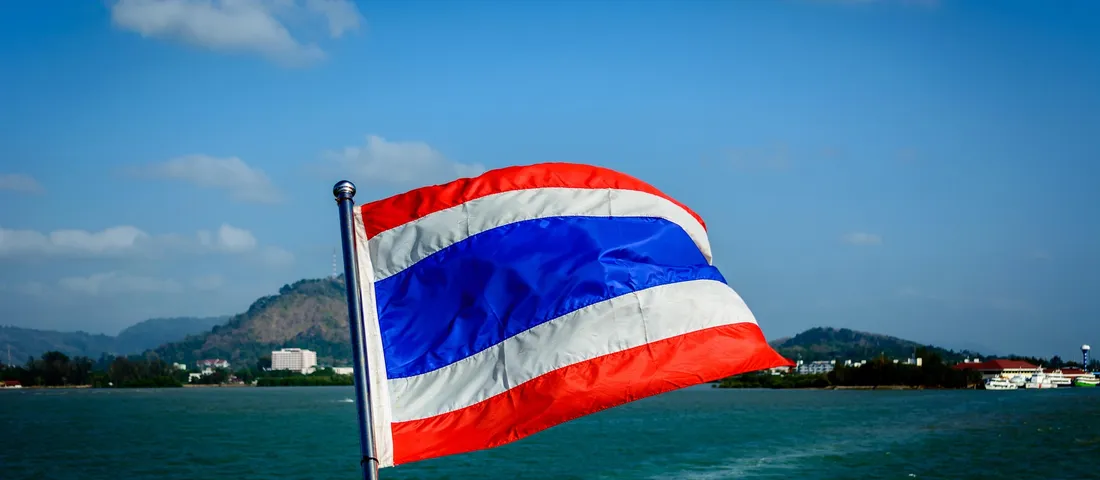
Phuket and the major resort cities are TouristDigiPay's primary stage.
Mid-2026 update: expectations vs the ground truth
Straight talk, per the available evidence: as of our verification date no official TouristDigiPay user or spending figures have been published, and mid-2026 reporting from Phuket's business community described low merchant awareness and friction in the ID-check steps. That's not a failure verdict — sandboxes exist to learn and adjust — but it does mean a smart traveller builds a trip budget with no single point of failure: carry a backup card, keep a global platform account you can sell from anywhere, and treat the TouristDigiPay balance as a welcome bonus where it works rather than the backbone of your spending plan.
Cash tips that genuinely save money mid-trip: Thai ATMs charge a flat fee of about ฿220 per foreign-card withdrawal (a couple of networks run slightly cheaper) — fewer, larger withdrawals beat frequent small ones. And when the screen offers to "convert to your home currency" (DCC), always decline: take the charge in baht and let your own issuer convert; the rate is better almost every time. For everyday purchases, remember this is a QR-first country — Thai QR/PromptPay processes over two billion transactions a month and many small vendors have no card terminal at all, so small cash plus a QR balance remains essential kit.

And if your dates land in late November 2026 — Bangkok stacks two major crypto events on one weekend (Bitcoin Thailand Conference at Samyan Mitrtown and Binance Blockchain Week at QSNCC, 28–29 Nov) — a fun detour built for exactly this audience.
Tourist FAQ
TouristDigiPay in one paragraph?
A regulatory sandbox from the SEC with the Finance Ministry, AMLO and the Tourism Ministry (announced 18 Aug 2025, 18-month pilot). Foreign tourists convert crypto to baht through a licensed digital-asset operator; the baht lands in a regulated e-money "tourist wallet" spendable via Thai QR nationwide. Merchants always receive baht — never crypto.
What are the spending limits?
Pilot terms: roughly ฿500,000/month at merchants with card terminals and ฿50,000/month at small vendors. No cash withdrawal, and conversions above ฿50,000/month trigger extra source-of-funds checks.
Can tourists buy crypto in Thailand?
Practically not on Thai exchanges — the THB leg requires a Thai bank account. But a global platform works exactly as it does at home: passport KYC, your own card, buy and hold. That’s the account to have ready before you fly.
Can I pay a hotel or restaurant directly in bitcoin?
Regulated businesses can’t accept it (the 2022 payment rules bind operators). What exists is a small voluntary Lightning scene — a few cafés in Chiang Mai and Koh Phangan — which is a private arrangement, not infrastructure. Budget your trip in baht.
Do crypto debit cards work in Thailand?
Yes — Visa/Mastercard products from international crypto providers work like any foreign card at Thai terminals; merchants receive baht and your issuer handles conversion. Details and comparisons in the crypto card guide.
What about Bitcoin ATMs for quick cash?
Plan around their absence — Thailand has no licensed crypto ATMs, whatever aggregator sites claim. The realistic cash route: sell on your platform, withdraw via card at a regular ATM. Full story in the ATM reality check.
Sources: TouristDigiPay announcement (18 Aug 2025) — SEC with MoF, AMLO and Ministry of Tourism & Sports · condition summaries — Tilleke & Gibbins · 2022 digital-asset payment rules — SEC/BOT.